The final polish makes a difference.
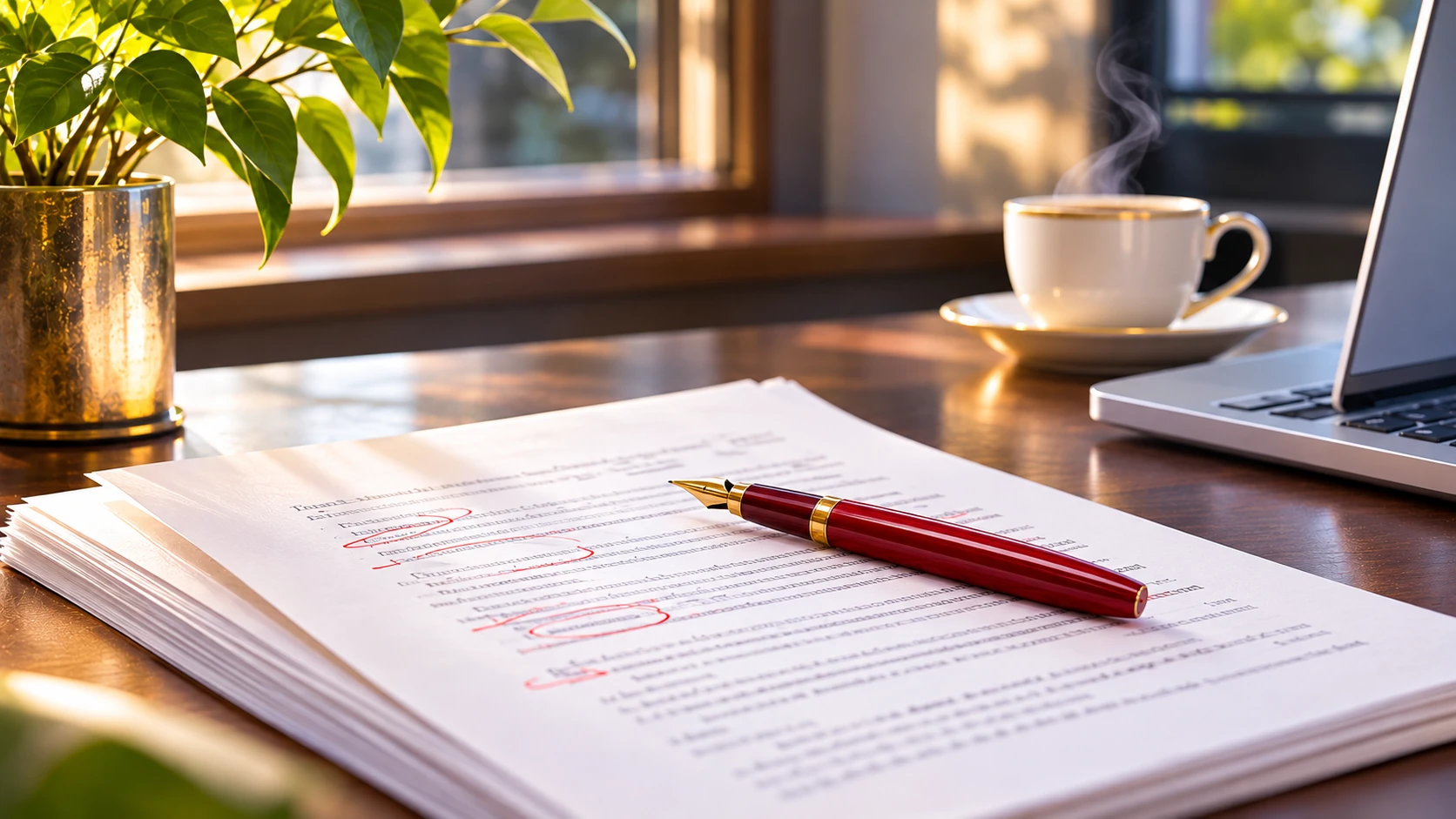
Proofreading
Before publication, a careful final review can help catch spelling, grammar, punctuation and typographic inconsistencies that distract readers.
Proofreading is most useful after major revisions and layout decisions are settled. Discuss the condition of your manuscript to determine the appropriate next step.
Discuss proofreadingPrepare for a careful final review
Familiarity with a manuscript can make small mistakes surprisingly difficult to notice. Authors often remember what they intended to write and may read past an incorrect word, missing punctuation mark or repeated phrase. A dedicated proofreading stage creates an opportunity to examine the actual text more closely.
Proofreading is concerned with details such as spelling, punctuation, grammar and typographic consistency. In a laid-out book, a final review may also draw attention to unexpected text breaks, inconsistent headings or other visible irregularities that could interrupt the reading experience.
When to schedule proofreading
Timing matters because changes made after a proofread may introduce new errors. Where possible, settle major revisions before requesting a final review, and determine whether the material to be checked is an editable manuscript, a formatted proof or another version of the book.
It is useful to identify intentional departures from standard usage, particularly in dialogue, specialized terminology or creative writing. A list of unusual names and preferred spellings can help distinguish deliberate choices from inconsistencies that need attention.
Discuss which version of the manuscript will be reviewed and how any remaining changes will be incorporated. After corrections are applied, checking affected passages again can help confirm that the final text reflects the intended wording.