Beautiful pages are designed to be read.
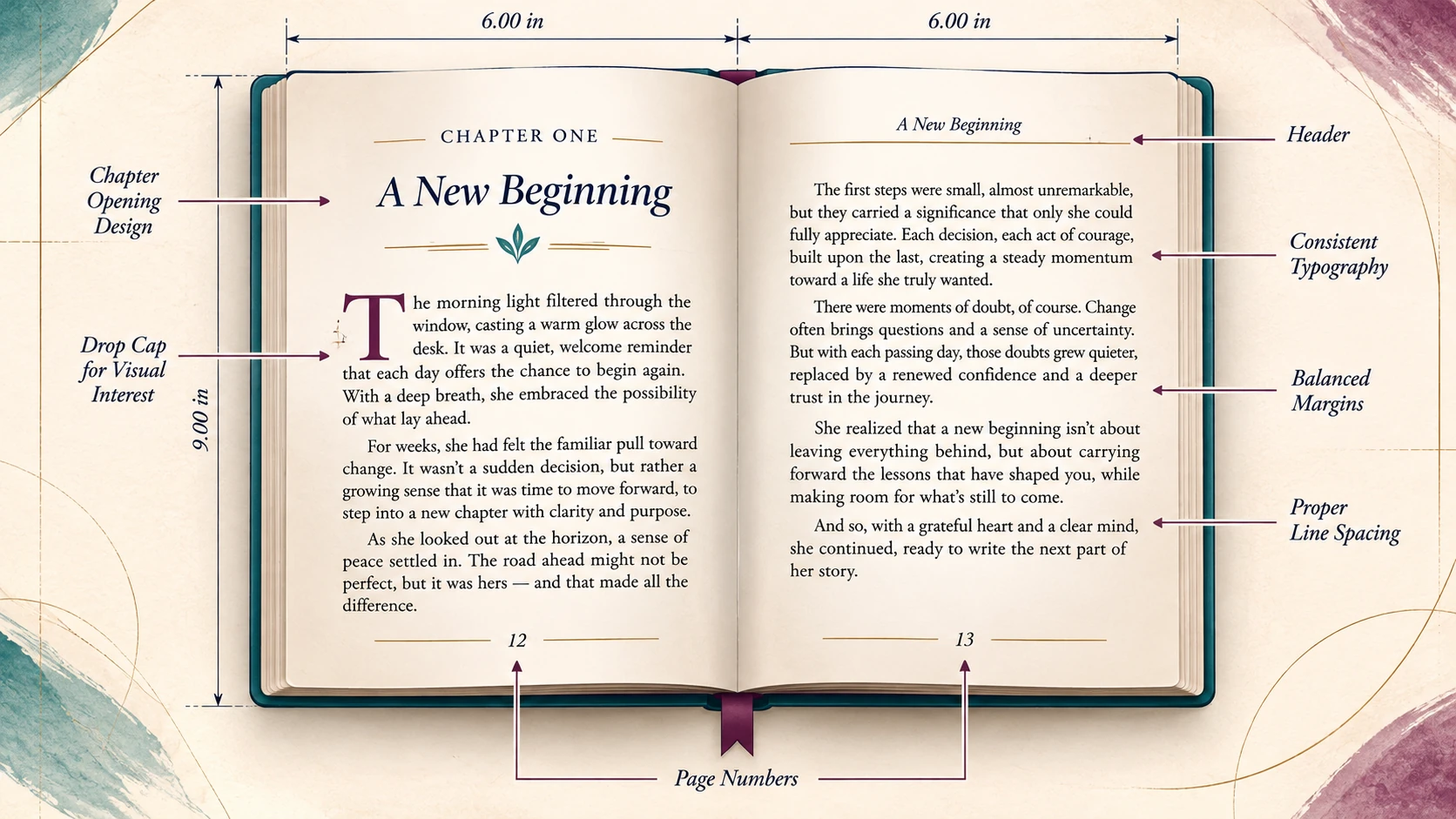
Interior formatting
Readable typography, consistent headings, appropriate margins and clear page organization make a book feel coherent from beginning to end.
Prepare for your format
Print and ebook layouts have different requirements. Discuss trim size, illustrations, chapter structure and intended formats before finalizing the interior.
Discuss book formattingCreate an interior that supports comfortable reading
Interior formatting translates a manuscript into an organized reading experience. Decisions about type size, line spacing, margins and heading hierarchy influence how comfortably a reader can follow the material. A successful layout supports the content without drawing unnecessary attention to itself.
Different kinds of books present different challenges. A straightforward narrative may need a consistent chapter treatment and unobtrusive page numbering, while a reference work may include tables, captions, footnotes or several levels of headings. Identifying these elements early helps establish a coherent layout plan.
Designing for print and digital reading
Print design involves a fixed page size and consideration of the space near the binding. Many ebook formats instead allow readers to change text size, which means that fixed page positions and decorative spacing may behave differently. The layout strategy should reflect the intended edition rather than treating digital publication as a simple copy of the print file.
Before finalizing the interior, review chapter openings, breaks, illustrations and navigation where applicable. A representative sample of the most complex pages can be particularly helpful in identifying layout decisions that need further discussion.
Coordinating production details
The finished interior and the cover are related production elements. In print, for example, changes to the final page count may affect spine dimensions. Coordinate the timing of approvals and confirm the technical requirements of the intended production route before preparing final files.